
If you’ve ever participated in the New York Times Spelling Bee, you can relate to the satisfaction of uncovering that elusive word hiding in plain view. Today’s puzzle presents a captivating blend of consonants and vowels, creating unexpected word combinations. In this article, we’ll provide you with the complete list of words you can form, share strategies for tackling puzzles more efficiently, and highlight the standout pangram waiting to be discovered.
About Today’s Puzzle
With R as the central letter, today’s hive features A, F, I, L, O, W surrounding it. The blend feels harmonious, offering plenty of vowels to inspire creativity and a robust collection of consonants for forming longer words. Once you uncover a few key patterns, especially for words starting with F and ending with common suffixes, the puzzle begins to unfold elegantly. The letter combinations tend to be familiar, but the pangram will require a bit more inventive thinking to identify.
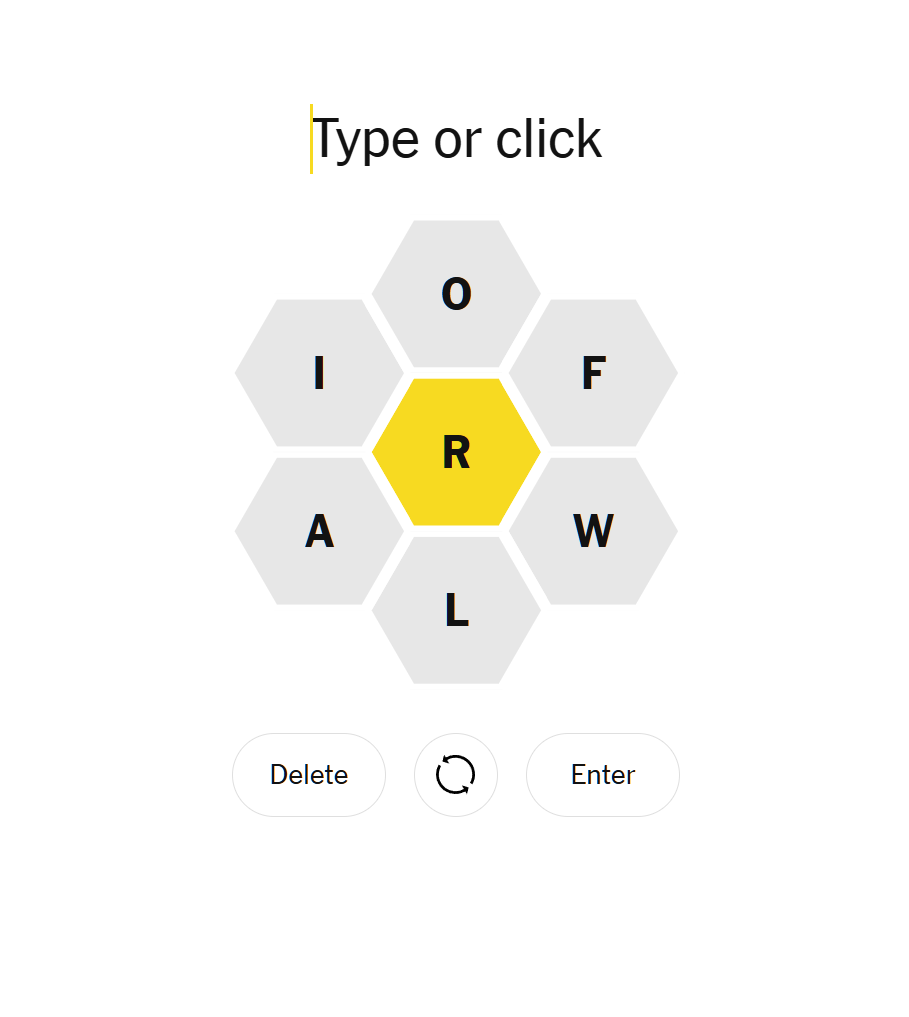
NYT Spelling Bee Words and Answers: January 31, 2026
Here’s a comprehensive list of words that conform to today’s rules. Please note that some may be less common or unusual, so the official NYT list could differ.
4-Letter Words
Afar
Afoil
Alar
Awol
Fair
Fail
Fiar
Foal
Foil
Fora
Frow
Lair
Lear
Liar
Lira
Loir
Oral
Roil
Roll
Rolf
5-Letter Words
Ariel
Flail
Flair
Flora
Foray
Frail
Friar
Frill
Filar
6-Letter Words
Aerial
Floral
Florar
Raffia
7-Letter Words
8-Letter Words
Firewall
Rainfall
Waterfall
Pangram of the Day
Today’s remarkable pangram is AIRFLOW, seamlessly incorporating all seven letters without feeling contrived. This word embodies the flow of air within a space—something solvers might initially overlook because it seems so basic. Once you uncover it, you’ll recognize how naturally the letters come together. Other potential longer words demonstrate the versatility of this letter set as you start combining familiar word elements.
Quick Tactics for Any Puzzle
- Start with the center letter.
Since every word must include this letter, focus on creating short “roots” containing that letter first, then build outwards. - Experiment with prefixes and suffixes.
Identify common beginnings (such as re-, pre-, tri-) and endings (like -er, -ry, -ing). These patterns can unlock numerous words. - Shuffle your findings.
After identifying a word, rearrange its letters—this often reveals two or three additional words. - Utilize repeated letters.
Keep in mind that letters may occur more than once. Doubling up on letters can lead to words you might miss. - Seek out pangrams.
Aim to use all seven letters at least once. Finding a pangram can be tricky, but it feels like striking gold when you do.
Habits to Sharpen Your Skills
Start with simple 4-letter words to warm up your brain.
Mix and match vowels and consonants in various combinations to see what fits.
Take breaks and return later—fresh eyes can spot words you may have missed.
- Pen and paper. Jotting down letters or sketching patterns can help reveal hidden words.
- Word-finding apps. Useful for practice or study, but limit usage to maintain the challenge.
- Personal word journal. Keep track of words you frequently overlook—over time, this will help you recognize them more quickly.
Wrap-Up
Today’s word hive beautifully demonstrates why the NYT Spelling Bee continues to be a cherished daily game. Engaging with letter combinations, detecting patterns, and constructing longer words all contribute to a fulfilling experience that encourages players to return each day. The central R prompts some delightful combinations, especially as you unlock AIRFLOW and realize how many related words stem from it. Did you discover more words than you anticipated or come across an unexpected favorite? Feel free to share your score, top finds, or strategies in the comments section, and join the discussion.