If you’ve ever enjoyed the New York Times Spelling Bee, you understand the thrill of uncovering that elusive word hidden in plain sight. Today’s puzzle is particularly enjoyable, as the combinations are both simple and slightly tricky. In this post, you’ll find the complete list of words you can create, some strategies to help you solve puzzles more efficiently, and an opportunity to share any words you’ve discovered that aren’t included here.
About Today’s Puzzle
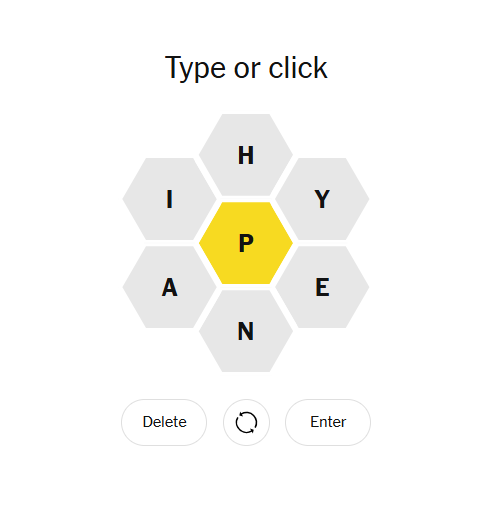
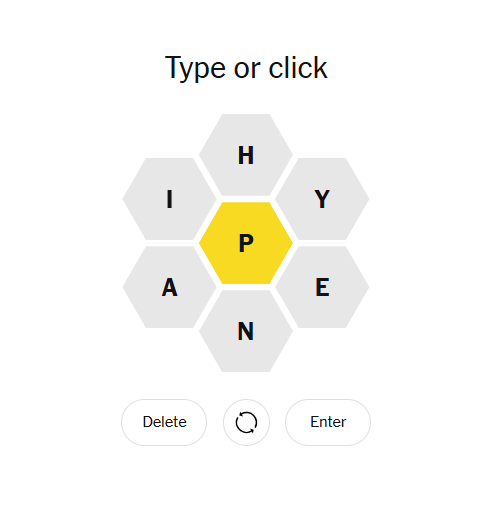
Centered around the letter ‘P’, this puzzle feels lively and surprisingly expansive. It strikes a friendly balance between vowels and consonants, along with several letters that lend themselves to repetition. This combination makes it easier to identify short words early on while still allowing room for longer, more satisfying discoveries as you delve into the patterns.
NYT Spelling Bee Words and Answers: February 2, 2026
Here is a comprehensive list of words that comply with today’s rules. Note that some may be rare or unusual, so the official NYT list might differ.
- YIPPEE
- APNEA
- EPEE
- HAPPEN
- HAPPY
- HEAP
- HIPPIE
- HIPPY
- HYPE
- HYPHEN
- NAPE
- NEAP
- NINEPIN
- NIPPY
- PAEAN
- PAIN
- PANE
- PANINI
- PAPA
- PAPAYA
- PAPPY
- PAYEE
- PEPPY
- PEEN
- PEEP
- PENNE
Pangram of the Day
EPIPHANY stands out today as it encompasses every letter within the hive in one cohesive, satisfying term. It naturally incorporates repeated letters while still covering each unique letter, making it an exemplary Spelling Bee pangram. This word also resonates thematically, as finding it can feel like a small epiphany in itself.
Quick Tactics for Any Puzzle
- Start with the center letter.
As every word must include it, begin by forming short “roots” using that letter before expanding. - Play with prefixes and suffixes.
Look for common beginnings (like re-, pre-, tri-) and endings (such as -er, -ry, -ing). These patterns can often reveal multiple words. - Anagram your discoveries.
After finding a word, rearranging its letters can often lead to discovering two or three additional words. - Use repeated letters.
Keep in mind that the same letter can appear multiple times. Doubling letters can lead to words that might otherwise slip your notice. - Hunt for pangrams.
Attempt to utilize all seven letters at least once. Finding a pangram isn’t always easy, but it feels like striking gold when you do.
Habits to Sharpen Your Skills
- Start with simple four-letter words to get your mind engaged.
- Experiment with different combinations of vowels and consonants to see what “clicks.”
- Take a break and revisit later — fresh eyes will often catch words you previously missed.
- Pen and paper. Jotting down the letters or sketching patterns can unveil hidden words.
- Word-finding apps. These are excellent for study or practice, but use them sparingly if you want to maintain the challenge.
- Personal word journal. Keep track of words you frequently miss — over time, you’ll train yourself to recognize them more quickly.
Wrap-Up
Today’s word hive exemplifies why the NYT Spelling Bee continues to be such a beloved daily word game. Exploring letter combinations, recognizing patterns, and creating longer words all contribute to an engaging experience that keeps players returning each day. Did you discover more words than you anticipated or find a surprising favorite? Share your score, best finds, or strategies in the comments and join the discussion.