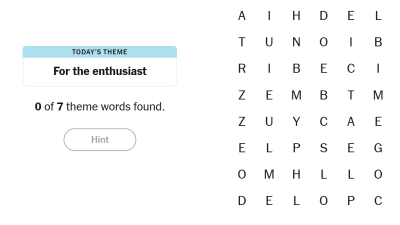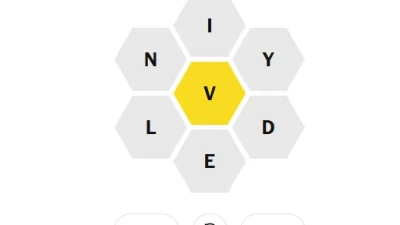

The New York Times Connections puzzle invites players to categorize 16 seemingly random words into four interconnected groups, each linked by a concealed thread. Today’s challenge features a delightful mix of physical activities, clever wordplay, and nostalgic elements, resulting in a puzzle that is both fun and a bit tricky. Below, you’ll find some subtle hints to help you think through the puzzle, along with the complete answers once you’re ready to verify your solutions.
Overview of the NYT Connections Puzzle: February 4, 2026
Today’s Connections puzzle emphasizes action-oriented thinking and lateral associations. Some groupings are intuitive, while others require recognizing patterns that go beyond their surface meanings. The set of anagrams is particularly enticing at the start, while the last category rewards those who remember cherished childhood games.

Hints for the NYT Connections: February 4, 2026
Category 1:
- Consider expressions of disagreement or conflict between individuals.
- Commonly used to describe arguments or rivalries.
- Frequently encountered in social, political, or competition-based contexts.
- Each word relates to interpersonal friction.
Category 2:
- Informal phrases that indicate uncertainty.
- Often found in casual conversation.
- Suggest an approximation rather than exactness.
- Tend to precede numbers or vague descriptors.
Category 3:
- Results are more dependent on luck than skill.
- Games typically yield random outcomes.
- Often result in immediate wins or losses.
- Commonly found in casinos, parties, or children’s play.
Category 4:
- Each word conceals something recognizable at the beginning.
- Pay attention to the initial letters.
- Sports enthusiasts might recognize the pattern quickly.
- All beginnings point towards a common theme.
Answers for the NYT Connections: February 4, 2026
Below are the answers, categorized accordingly.
Category 1:

Category 2:
Category 3:
Category 4:
Conclusion & Quick Strategy Tip
The February 4, 2026, Connections puzzle strikes a balance between straightforward action verbs and more intricate conceptual links, bringing great satisfaction once everything falls into place. Quick strategy tip: prioritize identifying the obvious verb groupings early on, then delve into the remaining words to uncover structural patterns or shared cultural references.